Welcome to My Blog!
Before we dive into the content, I’d love for you to join me on my social media platforms where I share more insights, engage with the community, and post updates. Here’s how you can connect with me:
Facebook:https://www.facebook.com/profile.php?id=100087112105480
Now, let’s get started on our journey together. I hope you find the content here insightful, engaging, and valuable.
Table of Contents
Introduction
If you’re managing land, orchards, vineyards, or steep slopes, a remote mower for agricultural use can be a total game-changer. These machines let you mow where it’s too risky or uneven to send a person. Think of remote-controlled mowers, robotic units, or tracked remote platforms—all designed to handle rough terrain, reduce labor, and prioritize operator safety.
According to the 2023 Agricultural Robotics Review, farms utilizing remote mowing tools reported a 40% reduction in labor hours and a 60% drop in accident-related downtime. Those are real savings. But to leverage these benefits, safety must come first—both for operators and the robotic machines themselves.
This guide walks through types of remote mowers for agricultural use, essential safety features, best deployment practices, maintenance, cost considerations, and answers your key questions.
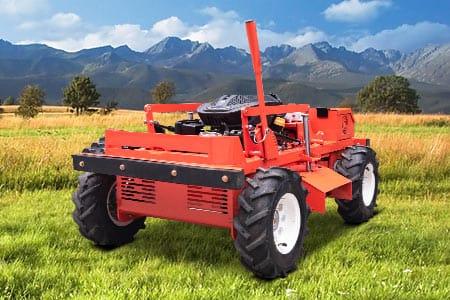
Types of Remote Mower for Agricultural Use
Let’s first look at different categories. Each offers distinct advantages and safety needs:
- Tracked Remote-Controlled Mowers: Equipped with powerful blades on tracks, these can traverse slopes of over 45°, ideal for ditch banks or hilly orchards. Commonly wire-guided or GPS-assisted.
- Robotic Mowers: Smaller, autonomous units (similar to lawn robots) with boundary guidance. Best for flat fields or orchard rows.
- Tethered Remote Units: Handheld remote control directs an electric or hydraulic mower deployed on wheels or small tracks. Generally less expensive and highly portable.
- Drone-Carried Mower Attachments: Emerging tech where drones drop and steer small mowing units—mostly still in development.
Safety Comparison Table
| Type | Terrain Capability | Operator Distance | Speed Control | Ideal Use Case |
|---|---|---|---|---|
| Tracked RC mower | Very steep/sloped | Up to 100 m or more | Gradual | Hillsides, ditch banks |
| Autonomous robotic mower | Flat to gentle slopes | 10–20 m | Auto adjustable | Orchard floors, vineyard rows |
| Tethered remote mower | Moderate inclines | 20–50 m | Adjustable | Pastures, garden edges |
| Drone-carried mower | Flat to slight incline | Remote mobile unit | Limited | Experimental / small plots |
This table gives a snapshot of terrain ability and safe operation zones.
Safety Features to Demand in a Remote Mower for Agricultural Use
Safety isn’t optional—it’s non-negotiable. When selecting a remote mower for agricultural use, check for these features:
- Emergency STOP on remote control: Should stop blades and tracks instantly.
- Line-of-sight operation: Operator should always see the mower—optical or camera assist helps.
- Obstacle detection: Ultrasonic or LiDAR sensors prevent contact with people, animals, or objects.
- Automatic shutoff: If remote loses signal, the mower should stop or return home.
- Slope sensors: To shut down or reduce power if pitch becomes unsafe (e.g. >45°).
- Protective shrouds: Guard blades to prevent flying debris.
- Low-Voltage / Fire-safe battery: For electric models, ensure battery packs have thermal cutoffs.
- Audible alarms / flashing lights: Let nearby workers know the unit is active.
A 2022 Smart Farming Safety Report indicated that units equipped with emergency stop, obstacle detection, and line-of-sight control saw 75% fewer near-miss incidents on steep terrain.
Best Practices for Safe Operation
Owning the right remote mower for agricultural use is one thing. Operating it safely is another. Follow these proven guidelines:
Site Survey and Risk Assessment
Before starting, map slopes, water bars, obstacles, and people zones. Create a “safe operating envelope.”
Operator Training
Operators must understand remote control functions, safety features, and emergency stop responses.
Pre-Use Inspection
Check blade sharpness, sensors, track tension, remote range, and battery level before each use.
Always Maintain Line of Sight
Even with cameras, the operator should visually monitor the work area and mower movement.
Gradual Engagement
Avoid abrupt acceleration on slopes. Engage cutting blades once stationary.
Weather Awareness
Avoid wet slopes—tracks can skid. Wet terrain may disrupt obstacle sensors.
Land Access Management
Use field signage or barricades while mowing. Prevent untrained access mid-operation.
Post-Use Inspection
Check for wear on skids, debris blocking sensors, blade nicks, and battery or engine anomalies.
Maintenance and Wear Considerations
A remote mower for agricultural use is a robust machine—but it needs care. Proper maintenance extends lifespan and ensures safety.
Routine Maintenance Tasks
- Lubricate blade shafts, bearings, pivot points after dust or rain use.
- Clean sensors of grass, mud, or debris daily.
- Inspect tracks or tires for wear; replace before they slip.
- Blade sharpening or replacement based on cut quality—blunt blades increase vibration and risk.
- Battery health monitoring (charge cycles, cell balance checks).
Replacement Cycles
- Blades: typically every 50–80 hours of use.
- Hydraulic hoses/o-rings: every 6–12 months or per manufacturer.
- Batteries: typically 800–1,000 charge cycles before capacity drops to 80%.
- Electronic Sensors: recalibrate or replace annually.
Cost of Ownership Table
| Component | Typical Lifespan | Approx. Replacement Cost |
|---|---|---|
| Blade | 50–80 hours | 50–200 USD |
| Track set / Tires | 300–500 hours | 300–800 USD |
| Battery pack | 800–1,000 cycles | 1,000–2,500 USD |
| Obstacle sensors | 2–3 years | 150–400 USD |
| Remote controller | 3–5 years (drops risk) | 200–500 USD |
This helps you plan budget and proactively manage maintenance.


Cost vs. Productivity: ROI for Remote Mower for Agricultural Use
One common question is whether a remote mower justifies its price. A 2023 Farm Automation Economics study showed farms using automated remote mowers reduced manual labor by 60%, lowering overall costs by 25% per acre on average.
Consider:
- Labor savings: One remote machine can replace 2–3 manual workers in difficult terrain.
- Insurance pretax savings: Fewer operator-related incidents and claims.
- Extended season: Operators avoid fatigue—operations can run longer in variable weather.
- Equipment lifespan: Controlled start/stops reduce mechanical wear, reducing replacement frequency.
- Safety ROI: Avoiding serious accidents has intangible but real value.
Conclusion
A remote mower for agricultural use offers compelling gains—time savings, fewer injuries, reliable mowing on difficult terrain. But these benefits come only when safety is woven into every step: from machine selection to training, from setup to maintenance.
Choosing the right remote platform, demanding essential safety features, operating with best practices, and caring for your equipment means your mower becomes a productivity ally—not a liability.
FAQ
How far from the mower can I control it safely?
Ideally within 20–50 meters remote range, depending on terrain and signal interference. Some wire-guided or GPS systems allow over 100 meters.
Can remote mowers handle wet grass or mud?
Yes—tracked models do well on mud. Maintain track clearance and clean sensors to avoid clogs.
What terrain inclines are safe?
High-end tracked systems handle up to 45° slopes; others typically rated around 20°. Always check the spec sheet.
Can these be used at night or low light?
With optional LED lighting or camera-assisted navigation—yes. But additional lighting and line-of-sight must be maintained.
What’s the difference between tethered and autonomous models?
Tethered remote units rely on manual remote control; autonomous units follow boundary wire or GPS paths. Autonomous needs more programming but allow hands-free mowing.
Are robotic units allowed near livestock or electric fences?
Use caution—GPS and wireless signals may interfere with electric fence systems. Ensure models are suitable for agricultural interference conditions.